
Synths
Defective: Perfected.
Voices that disagree by a few cents, because each card rolled its own components. Top octaves that play flat because the reset takes real microseconds. A power supply that sags under a big chord. The faults are modelled rather than smoothed away, and the faults are why you reach for them. All of it runs on the engine inside Phonon, compiling the same source files the DAW does, so a plugin and the DAW can never drift apart in sound.
1 of 5 is free - no account, nothing to unlock.
What does this knob do? - why we build them this way
Can't afford our synths? Don't expose yourself to viruses. Email us instead. 🎶
The flagship
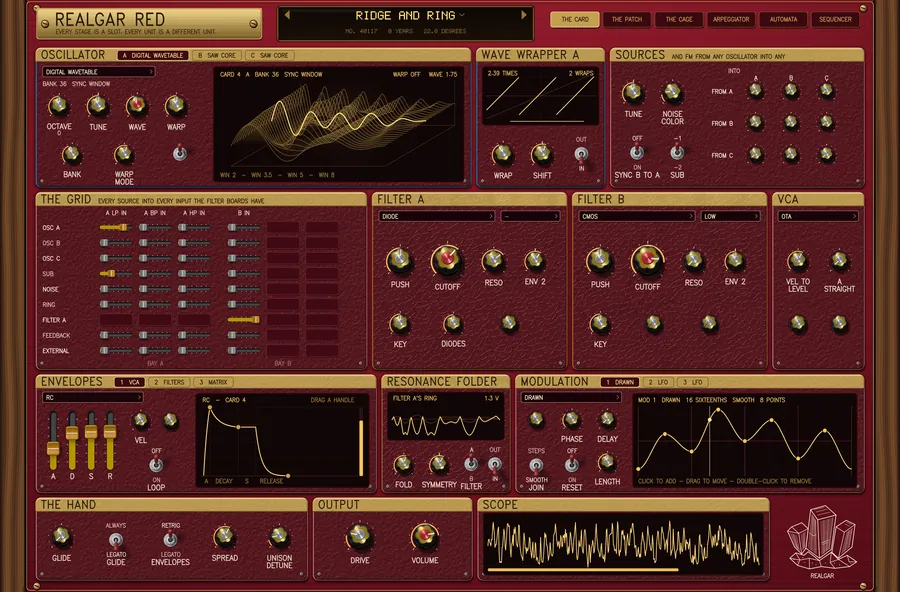
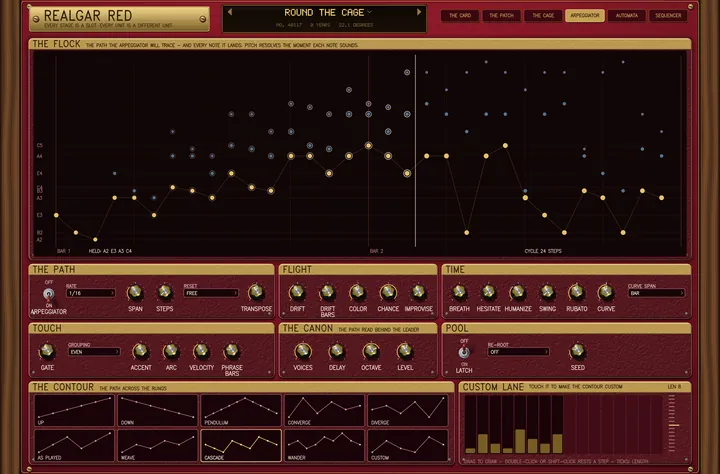
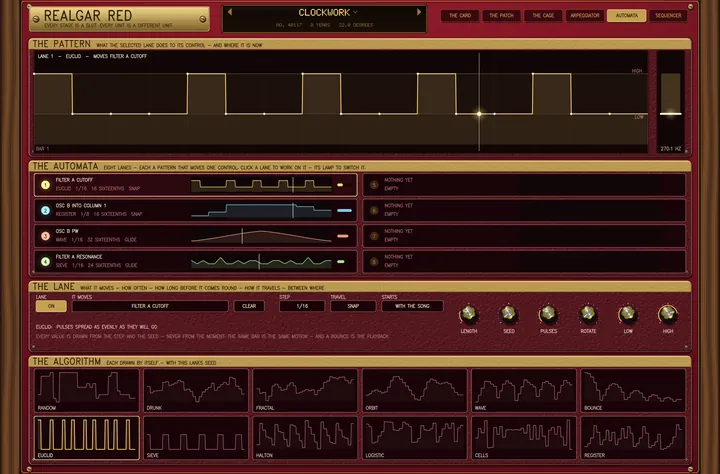
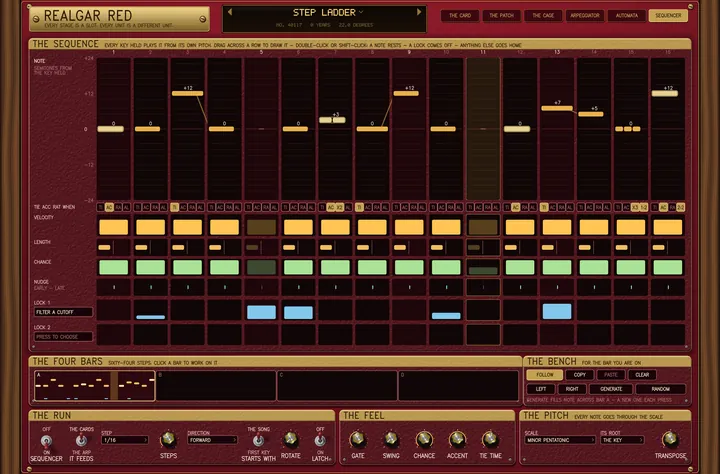
Realgar Red
Nine-Voice Board-Fitted Component-Modeled Polysynth
Uncompromising. Exceptional. Yours.
Most great synthesizers do a few things really well. Realgar does many things exceptionally. It's unapologetically complex. It's rigorously over-engineered. It's built like a real synthesizer fifty years ago, and it acts like one. That's not a mistake - it's the whole point. But Realgar isn't just one synthesizer. Nobody has heard it in most of its configurations, including us, because there are so many of them. It's a framework that you will never stop exploring.
VST3 · Windows 64-bit · macOS VST3 and Audio Unit are in development.
Also up front
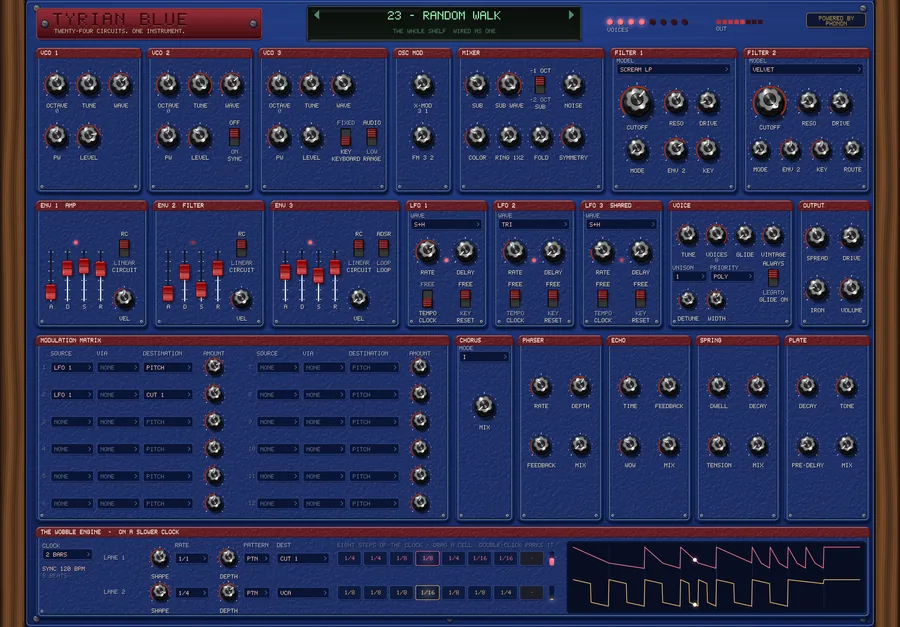
Tyrian Blue
Eight-Voice Component-Modelled Polysynth
Twenty-four circuits. One instrument in royal blue.
- The big expensive-sounding polysynth, and still one instrument rather than a menu
- Pads that shimmer because no two of the eight voices agree
- One knob decides whether the whole instrument is fresh out of the box or long past its best
- Slow wobbles that stay locked to the song, bar after bar
- Five effects on board, so it is finished before it leaves the plugin
- Deep enough to live in for a year, and playable in five minutes
VST3 · Windows 64-bit · macOS VST3 and Audio Unit are in development.
Also up front
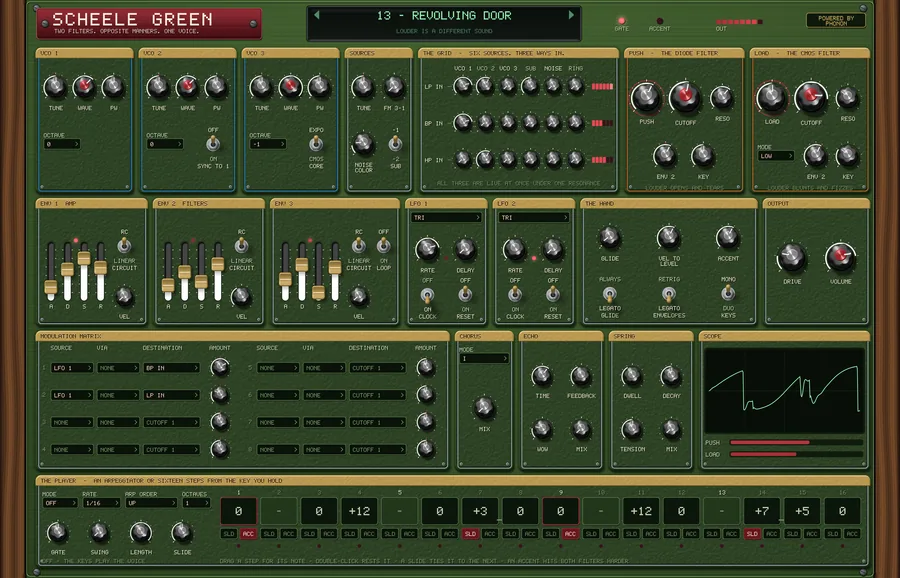
Scheele Green
Two-Filter Component-Modelled Monosynth
Louder is a different sound.
- Play harder and it is a different sound, not a louder one
- Two filters that come apart in opposite ways, one feeding the other
- A knob for how hard you hit each of them, and no wrong setting
- A sixteen-step line with slides and accents, locked to the track
- Everything on the panel, and nothing in a menu
VST3 · Windows 64-bit · macOS VST3 and Audio Unit are in development.
Also up front
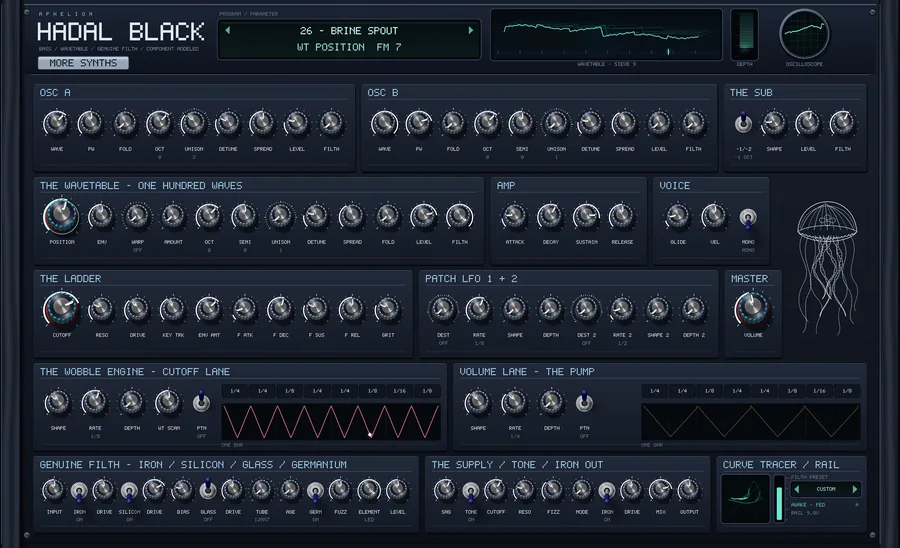
Hadal Black
Circuit Bass Synthesizer · Wavetable · Drive Channel
A circuit bass. A hundred waves. All of Genuine Filth.
- A heavy, growling bass that can turn into something else entirely
- Turn one knob and travel through a hundred different sounds
- Put real dirt on any part of the sound and leave the rest of it alone
- The low end stays solid under all of it, unless you decide otherwise
- Wobble that locks to the track, and can move the tone itself rather than the filter
VST3 · Windows 64-bit · macOS is in development.
Free
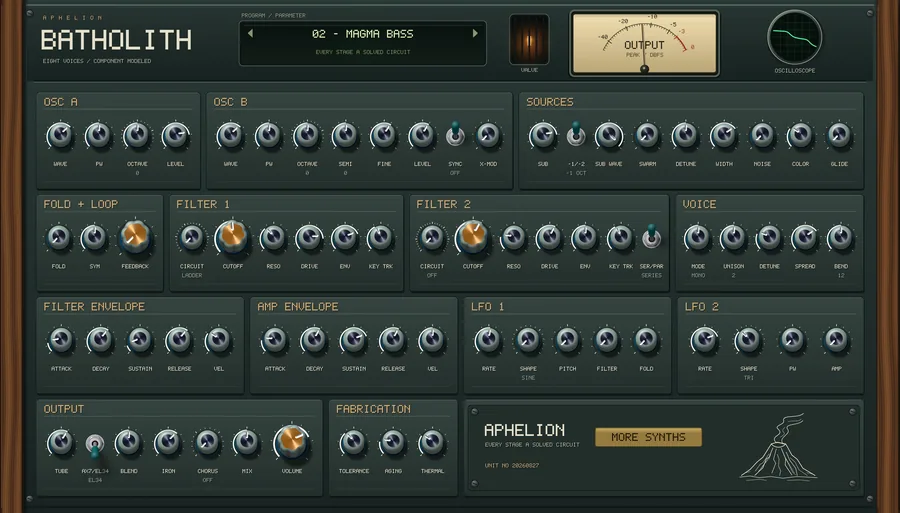
Batholith
Component-Modeled Synthesizer · Free Plugin
You had me at Free Synth.
- Free, and the plugin never asks who you are
- Hold a chord and you can hear eight slightly different instruments in it
- Lean on the resonance and it still sings in tune
VST3 · Windows 64-bit · macOS VST3 and Audio Unit are in development.
What “component-modeled” means here
Not that a circuit was measured and a curve fitted to it. The parts themselves are modelled - a resistor draws its own value within tolerance, a transistor is solved from the large-signal equation, a filter’s feedback loop is solved implicitly every sample instead of being given a one-sample delay to make the maths easier. It is the reason two voices in the same instrument are not quite the same circuit, and the reason resonance stays in tune. It describes how a particular instrument is built, so it is a claim each one makes for itself rather than one the shelf makes for all of them.
Exactly what it means, and where it stops: What does component-modeled mean?