ONLY WHAT YOU CHANGE
The panel plays the rest.
A note holds the controls you gave it, and nothing else. Change the panel, or load another preset under the roll, and every note follows it wherever it has no value of its own.
Nine-Voice Board-Fitted Component-Modeled Polysynth
Every note is a different synthesizer - literally.
One signal path, and every position on it an empty bay. You choose the circuit that stands in each, and then every note you write can choose its own.
VST3 · Windows 64-bit No activationmacOS VST3 and Audio Unit are in development.
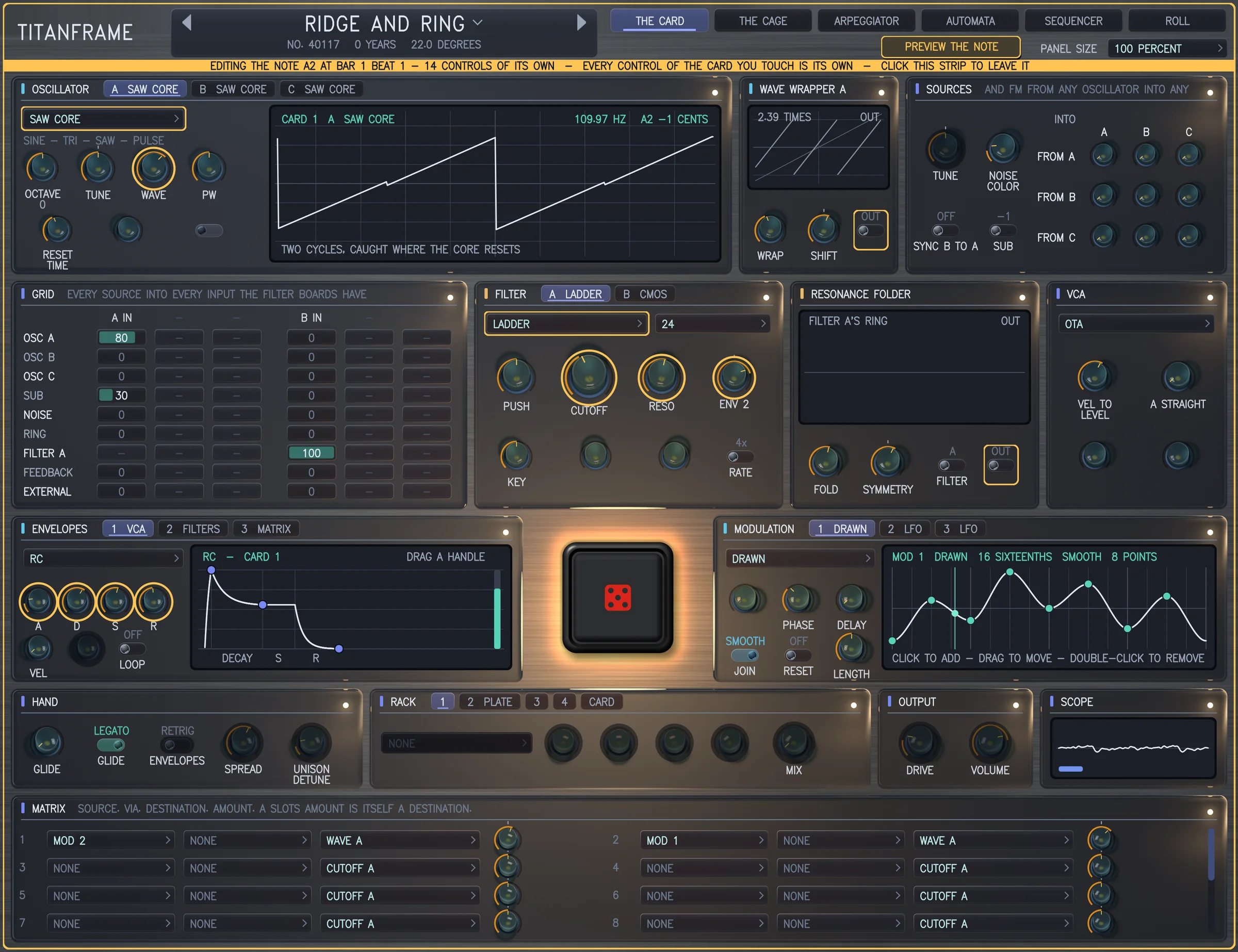
The ROLL
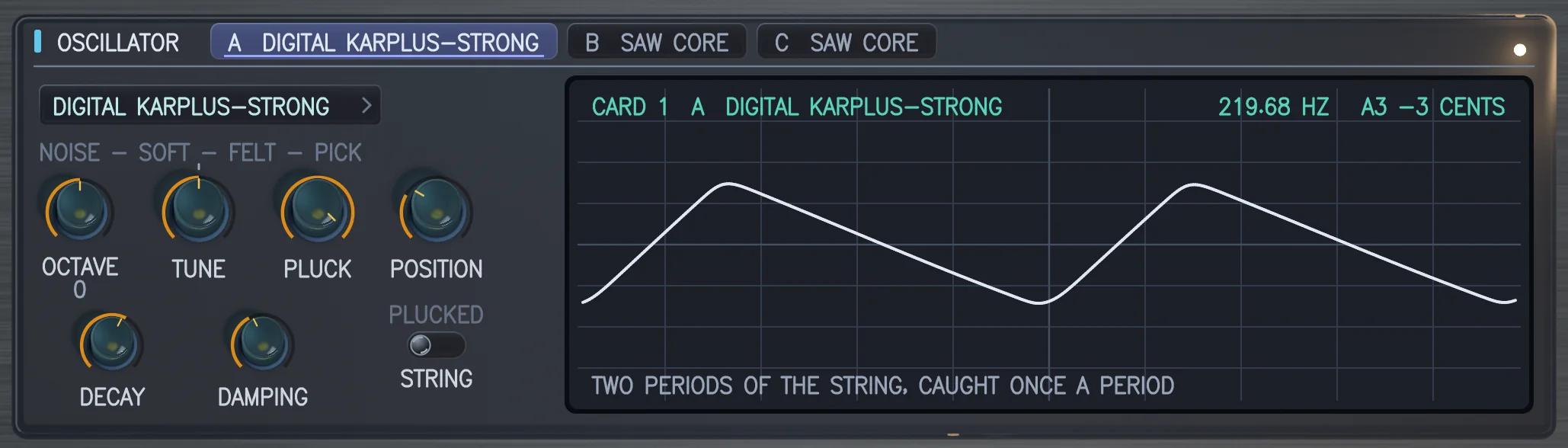
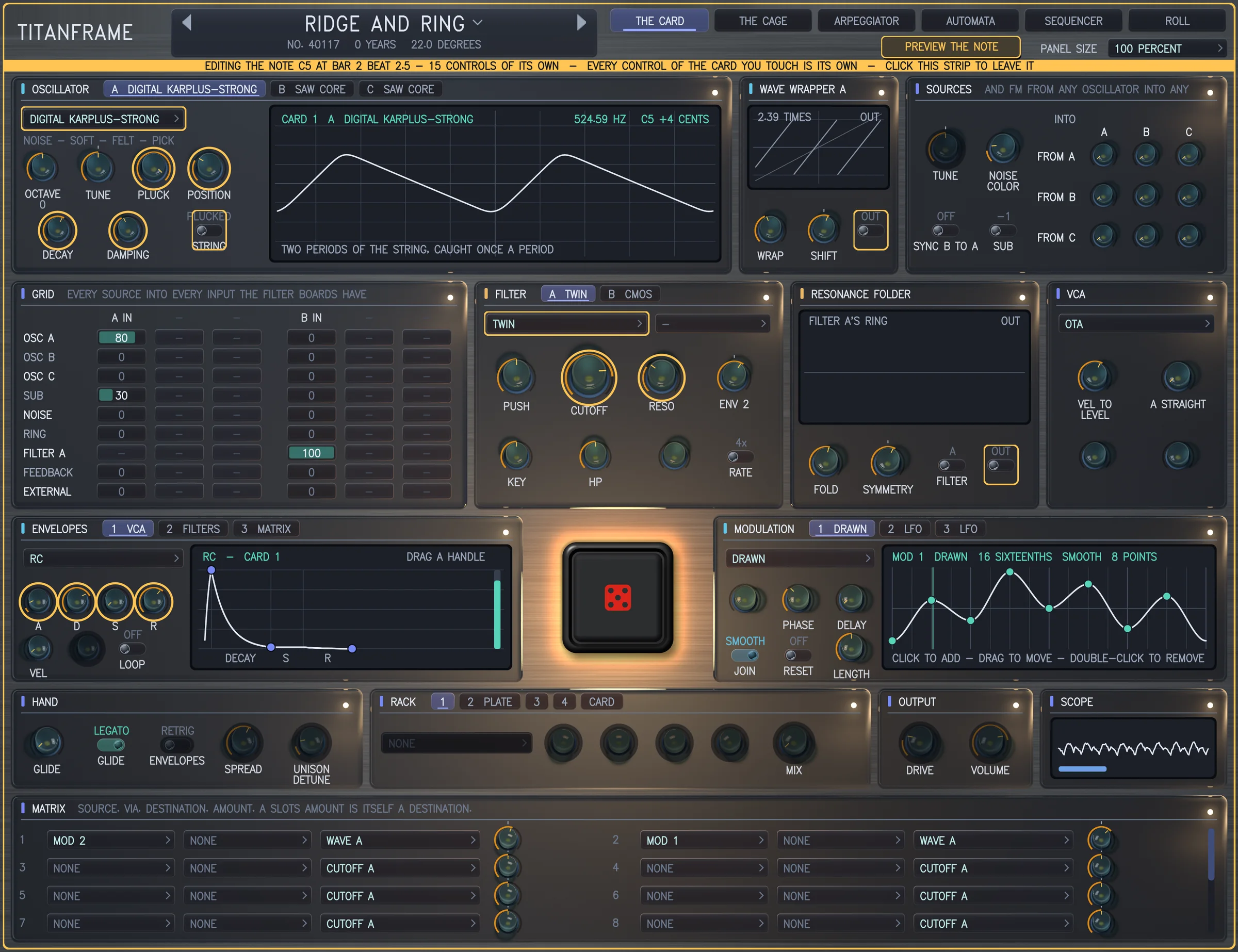
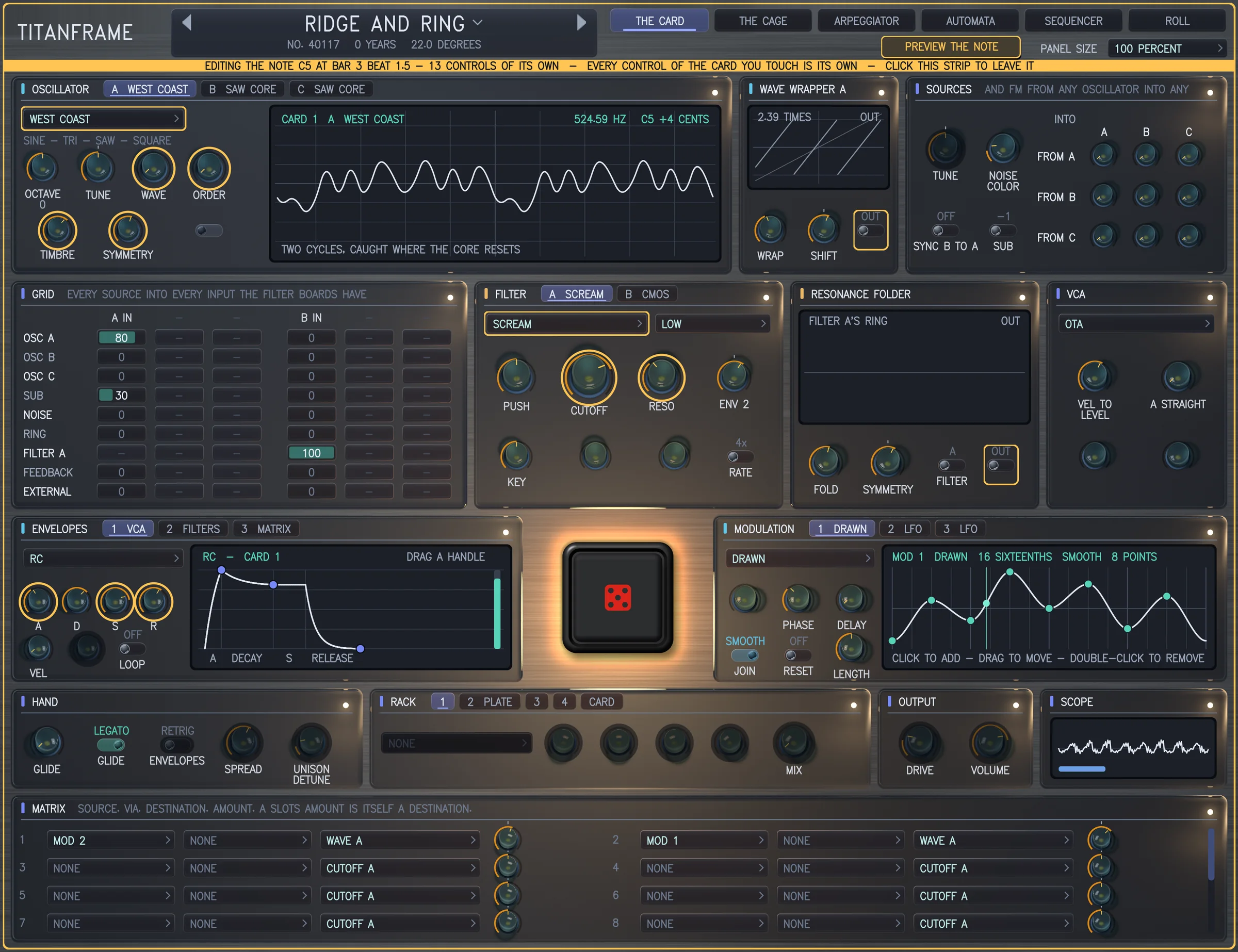
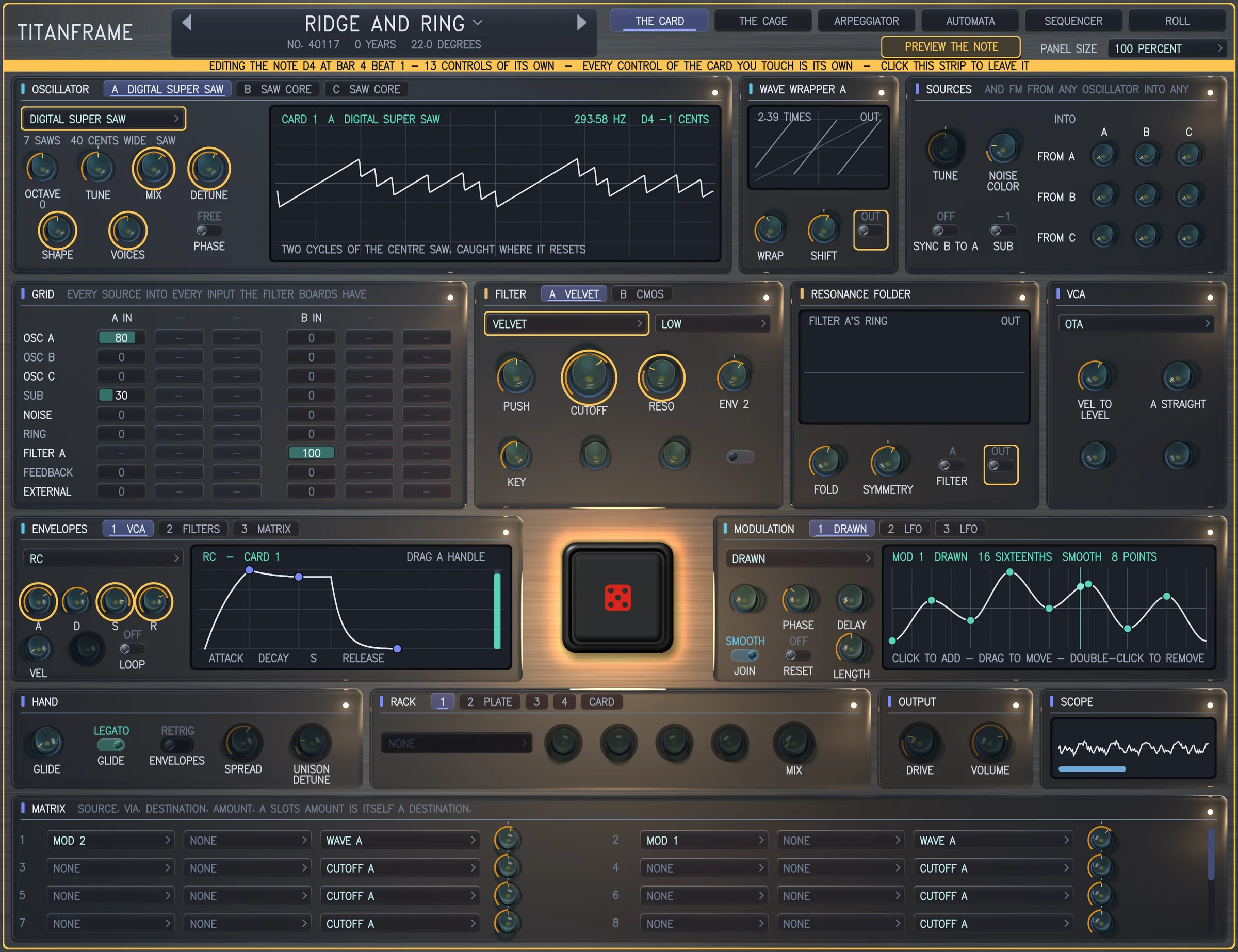
Write a part in the ROLL, and every note in it can carry a synthesizer of its own: any of the 242 controls of a card, down to the circuit standing in each bay. A note keeps only what you give it, and takes everything else from the panel.
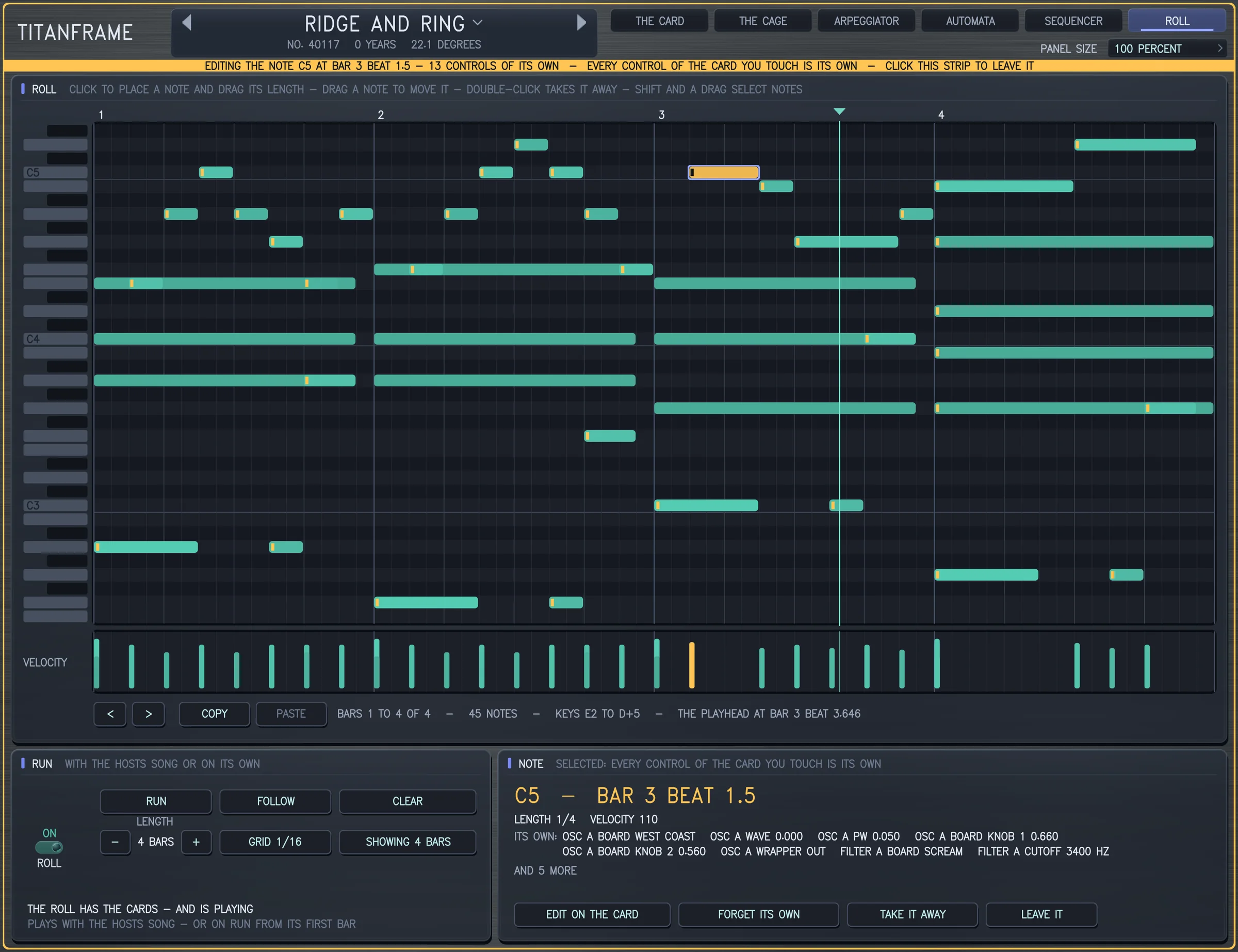
Place a note, drag its length, move it in time. The ROLL is a page of its own, and plays with your host's song or by itself.
THE CARD becomes that note. A strip across the panel names it, and every control the note owns is ringed in amber.
Whatever you turn is the note's, and never the host's: a cutoff, an envelope, the oscillator in bay A. PREVIEW THE NOTE plays it as it now is.
ONLY WHAT YOU CHANGE
A note holds the controls you gave it, and nothing else. Change the panel, or load another preset under the roll, and every note follows it wherever it has no value of its own.
WHOLE CIRCUITS
Two notes sounding together can be two oscillators into two filters through two envelopes. Every card keeps each board the roll asks for, ready before its note arrives.
NINE VOICES
A chord of nine notes can be nine different synthesizers, and each still plays on a card of its own, with its own parts.
SEVERAL AT ONCE
Shift and a drag select every note in a box, and a control you turn is given to every one. COPY and PASTE carry notes, each with its own controls, to the playhead.
THE NOTE WINS
A note's own value beats the host's automation and the automata. In MONO with legato, one note glides into the next one's controls, and strikes afresh where the circuits change.
ONE PLAYER AT A TIME
With the ROLL on, the arpeggiator and the sequencer step aside, and the keys still play the cards beside it. The roll is saved with your session, not the patch.
Hear it
Patches drawn by lot and held for half a minute. Levels matched, and nothing else done to them on the way here.
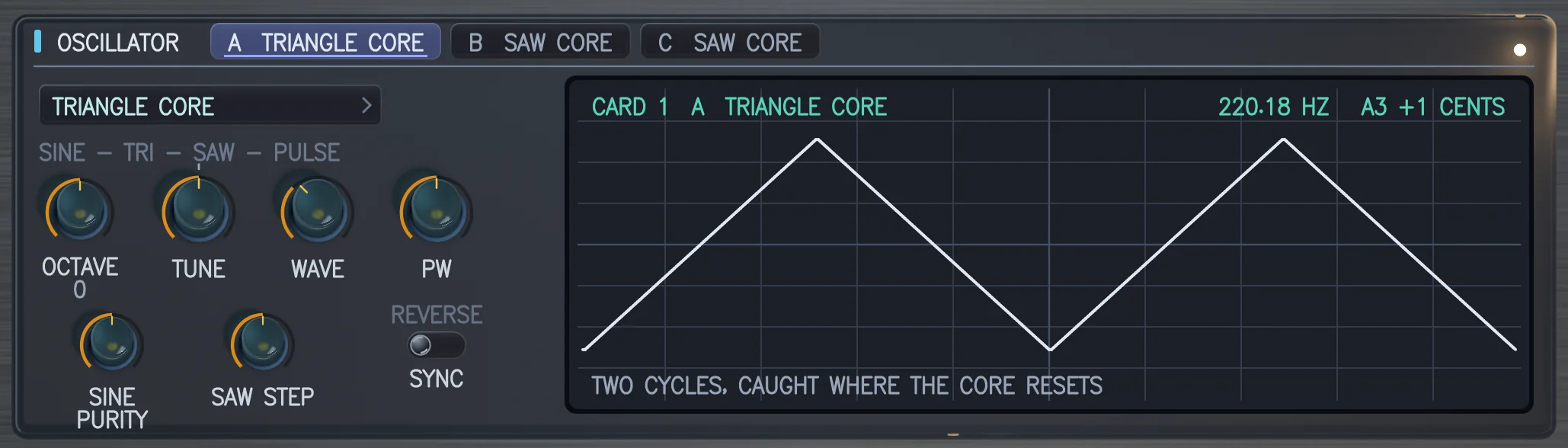
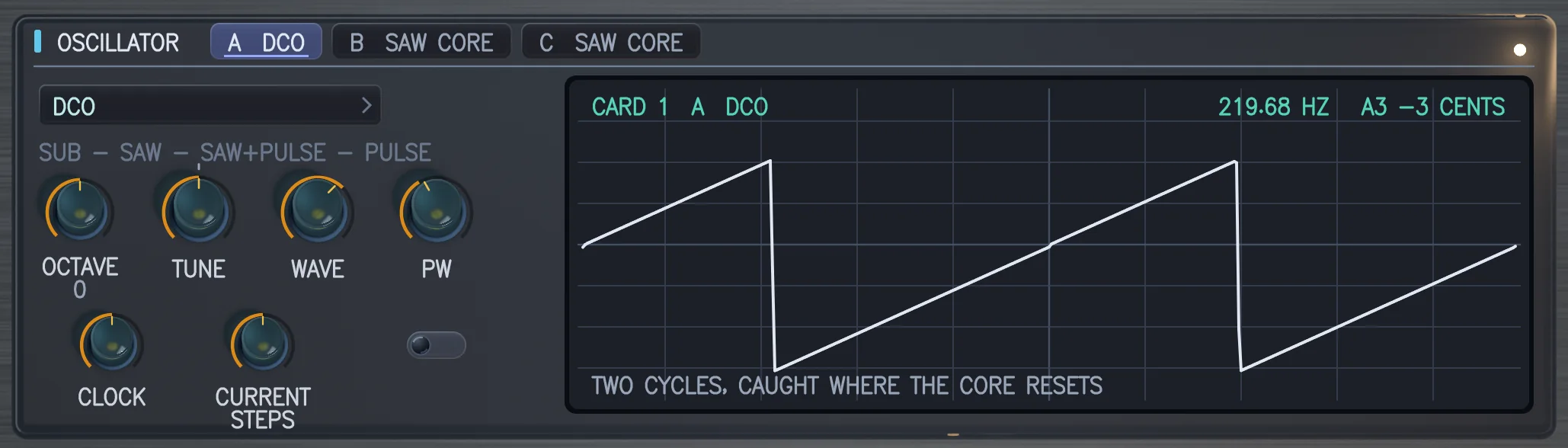
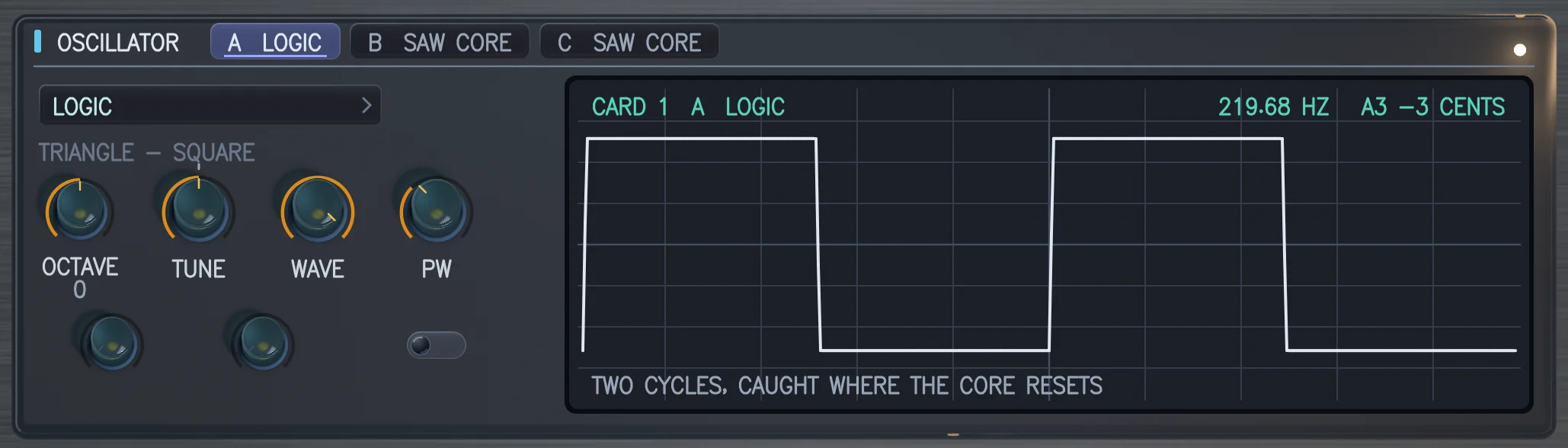
Oscillators TRIANGLE CORE, TRIANGLE CORE, LOGIC. Filters CMOS into DIODE.
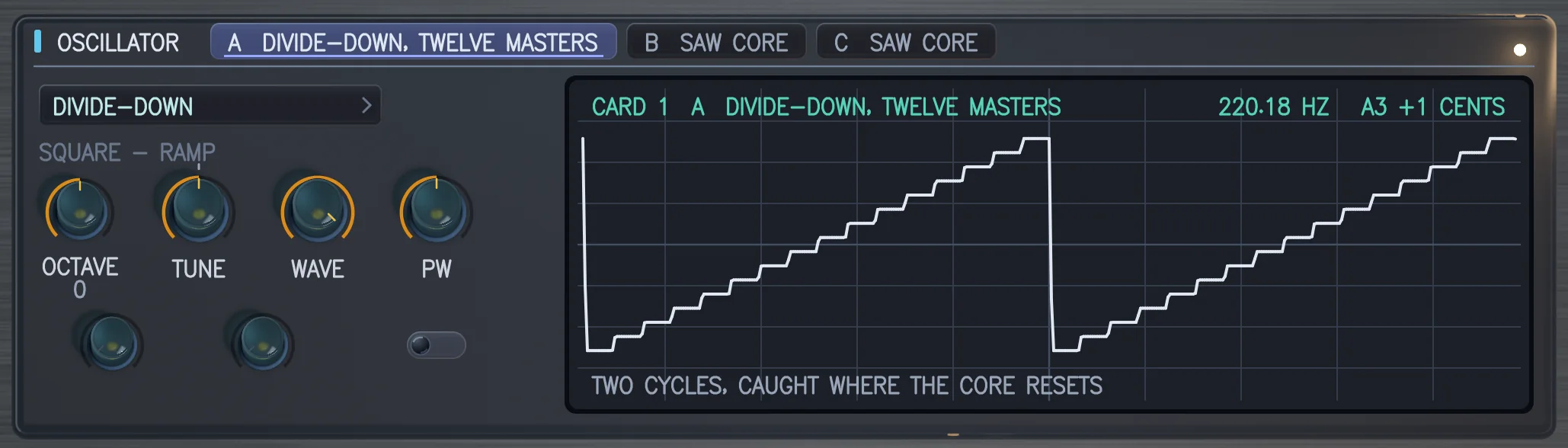
Oscillators DIODE SHAPER, DIVIDE-DOWN, LOGIC. Filters SLEW into CMOS.
Oscillators DIODE SHAPER, DIODE SHAPER, SAW CORE. Filters TWIN into VELVET. Wrapper on A, folder on filter A.
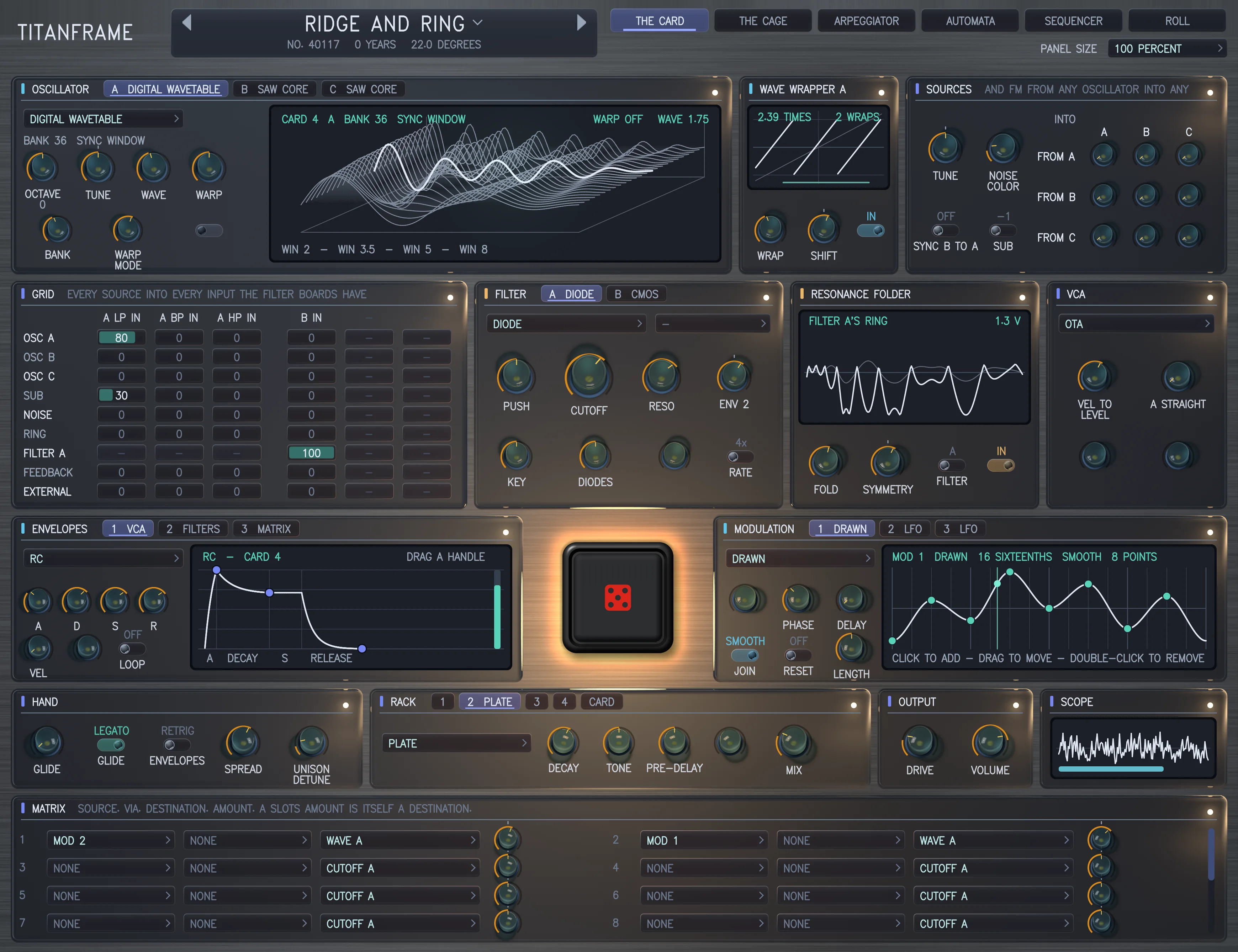
THE CARD
Three oscillator bays, the grid, two filters, the VCA, three envelopes and three modulators, with the matrix and the rack along its foot.
Ten oscillators
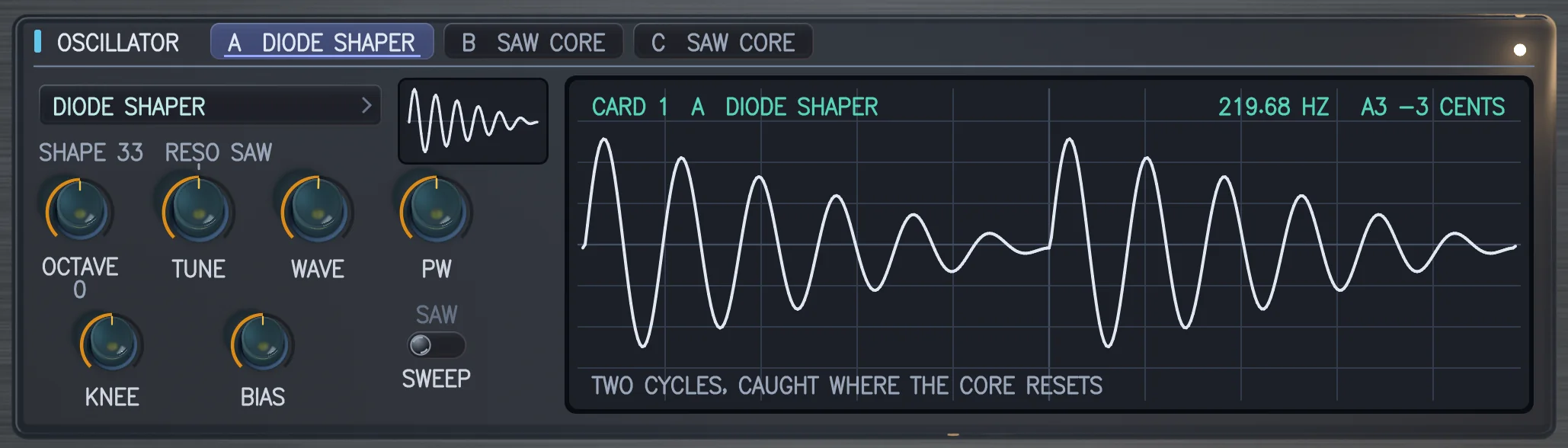
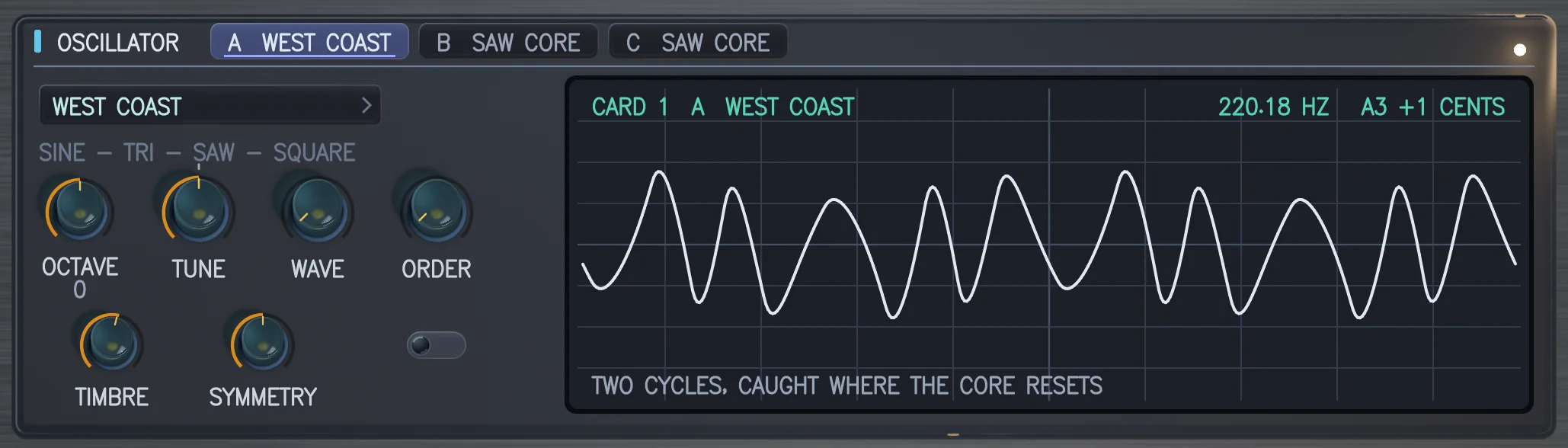
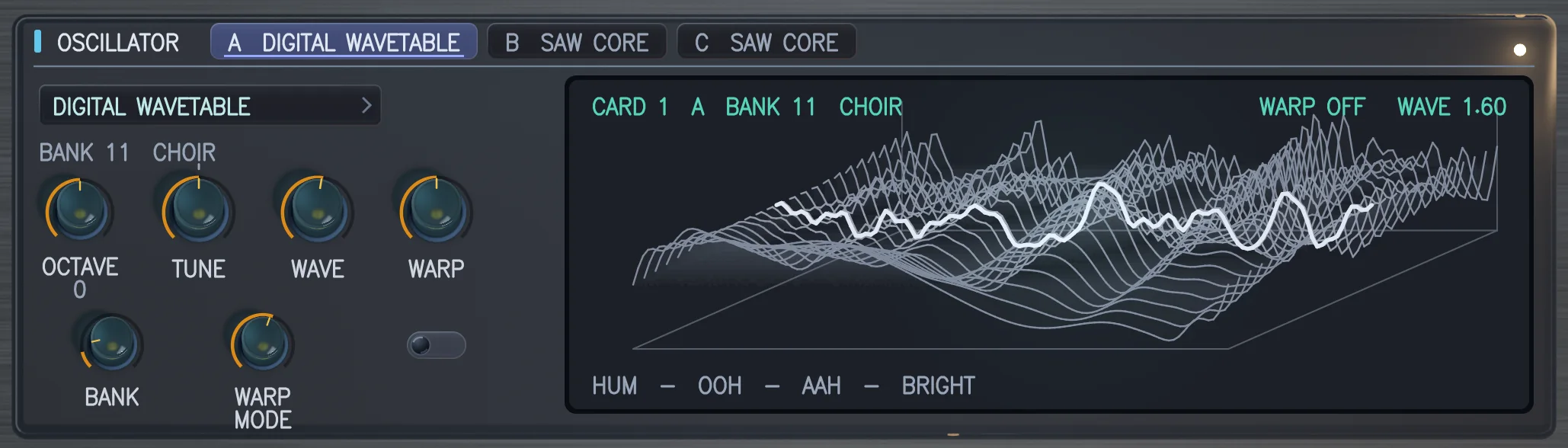
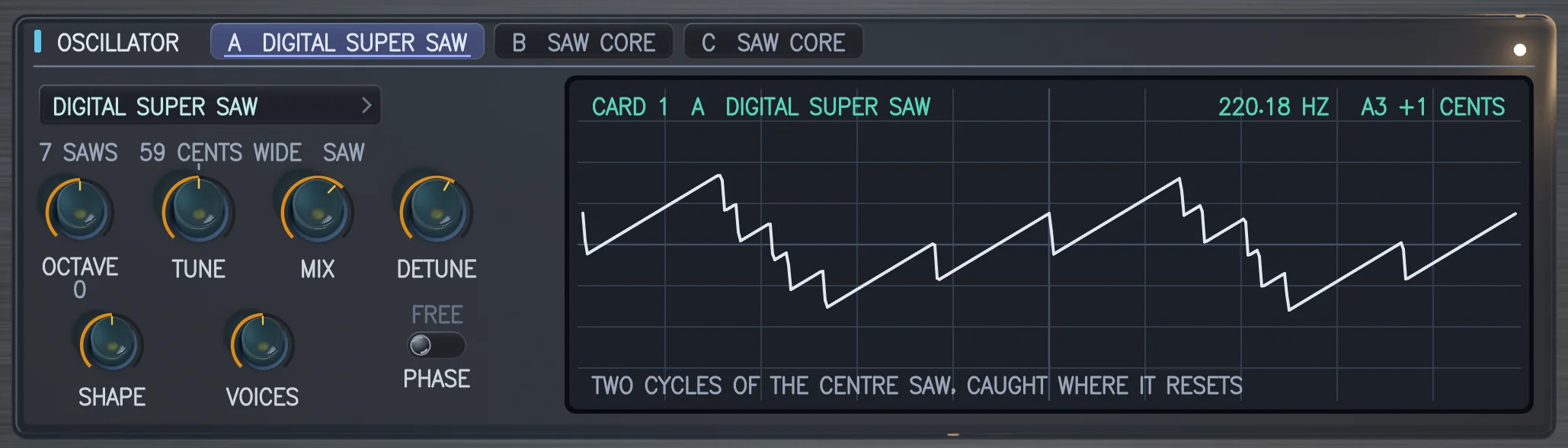
Each is a different idea about how to make a wave. Seven are circuits; three are digital, and say so.
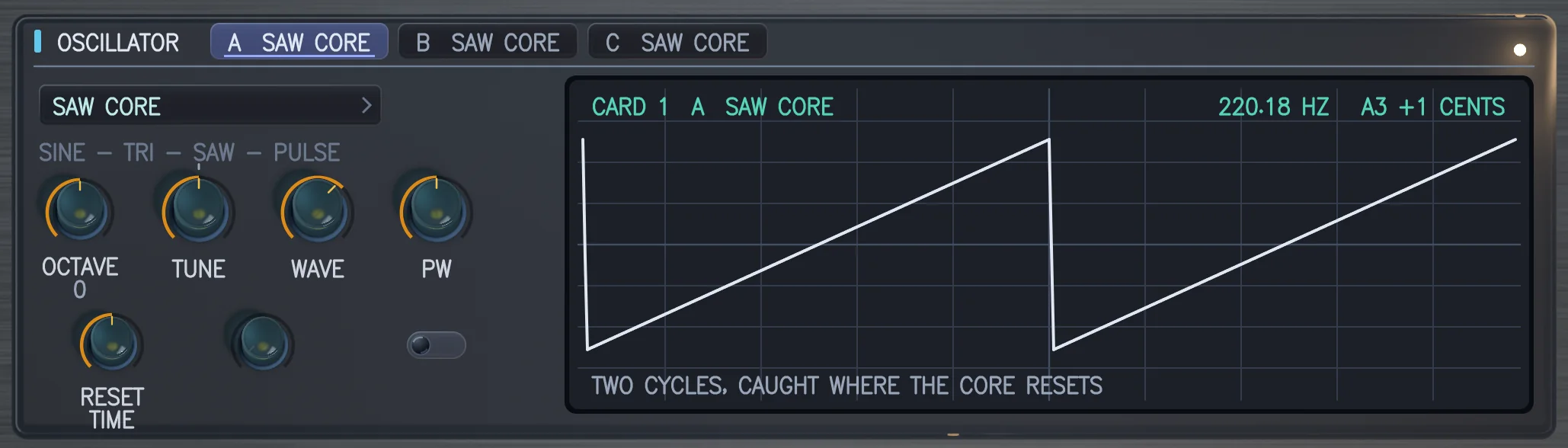
SAW CORE A capacitor, a reset comparator and an exponential converter.
The arithmetic
103oscillators122filters2amplifiers33envelopes53modulators
Thirty-two boards in five kinds of bay. Every way to fit the card is a different circuit, not a different setting of the same one, before a single knob is turned.
Drawn from a serial number that is yours
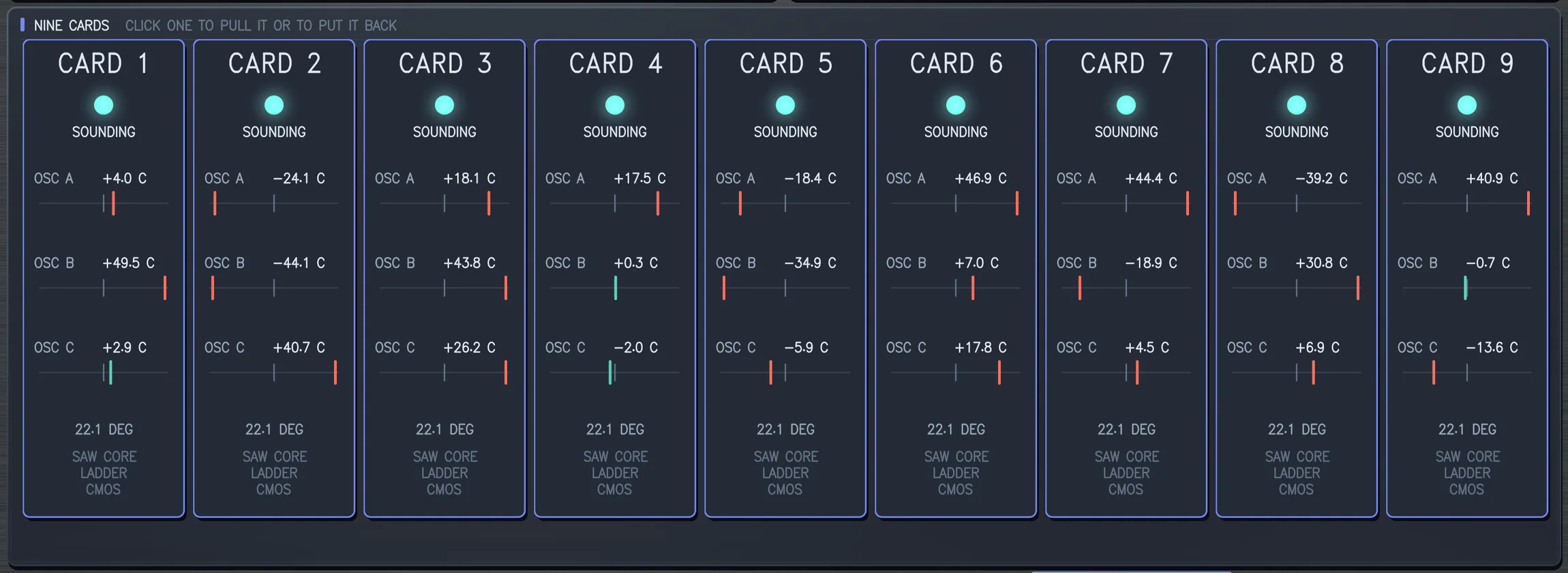
Every resistor and capacitor is a little off its nominal value, so your nine voices disagree with each other, and with everybody else's. It warms up. Its supply sags under a big chord. Its parts walk with age. And there are no tuning pots: one CALIBRATE button brings it back into tune, as it stands at that moment.
And the rest of it
PUSH
PUSH is how hard each filter is driven, centered on the level it was designed for, so one position pushes every filter as hard, and each answers in its own way.
THE CAGE
Strike one key nine times and you hear nine instruments. UNISON fans all nine; CANON passes your line down a shift register.
THE TUNING
Load a Scala file and every card plays in it. The arpeggiator and the sequencer find their intervals in it too.
THE MANUALS
An Owner's Manual, and a Service Manual with a data sheet for every board.
YOURS
No license server, and no phone-home.
It plays itself, three ways
Every choice the three players make comes from the step's place in the song and a seed, never from the moment. There is no random number generator in any of the three, and a bounce is the playback.
ARPEGGIATOR
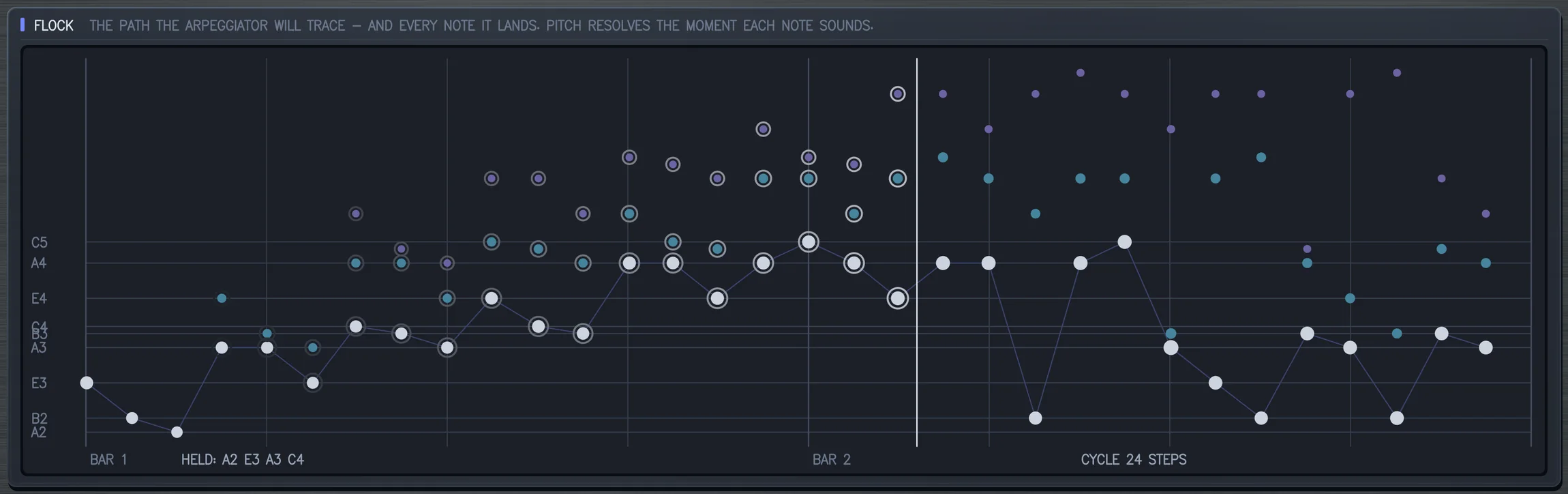
Nine contours or a lane you draw, eleven rates, and a canon of three voices.
AUTOMATA
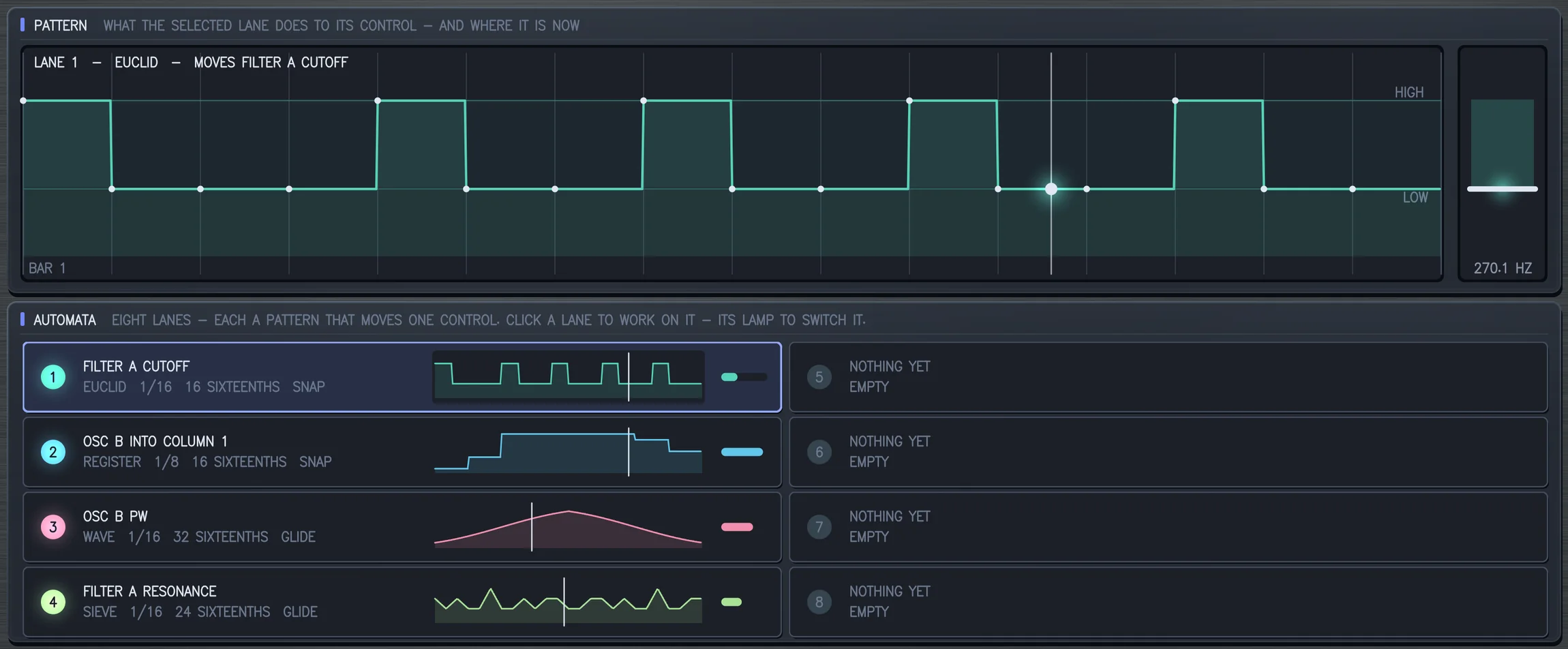
Twelve algorithms, each lane holding one control, from a cutoff to a knob of the arpeggiator.
SEQUENCER
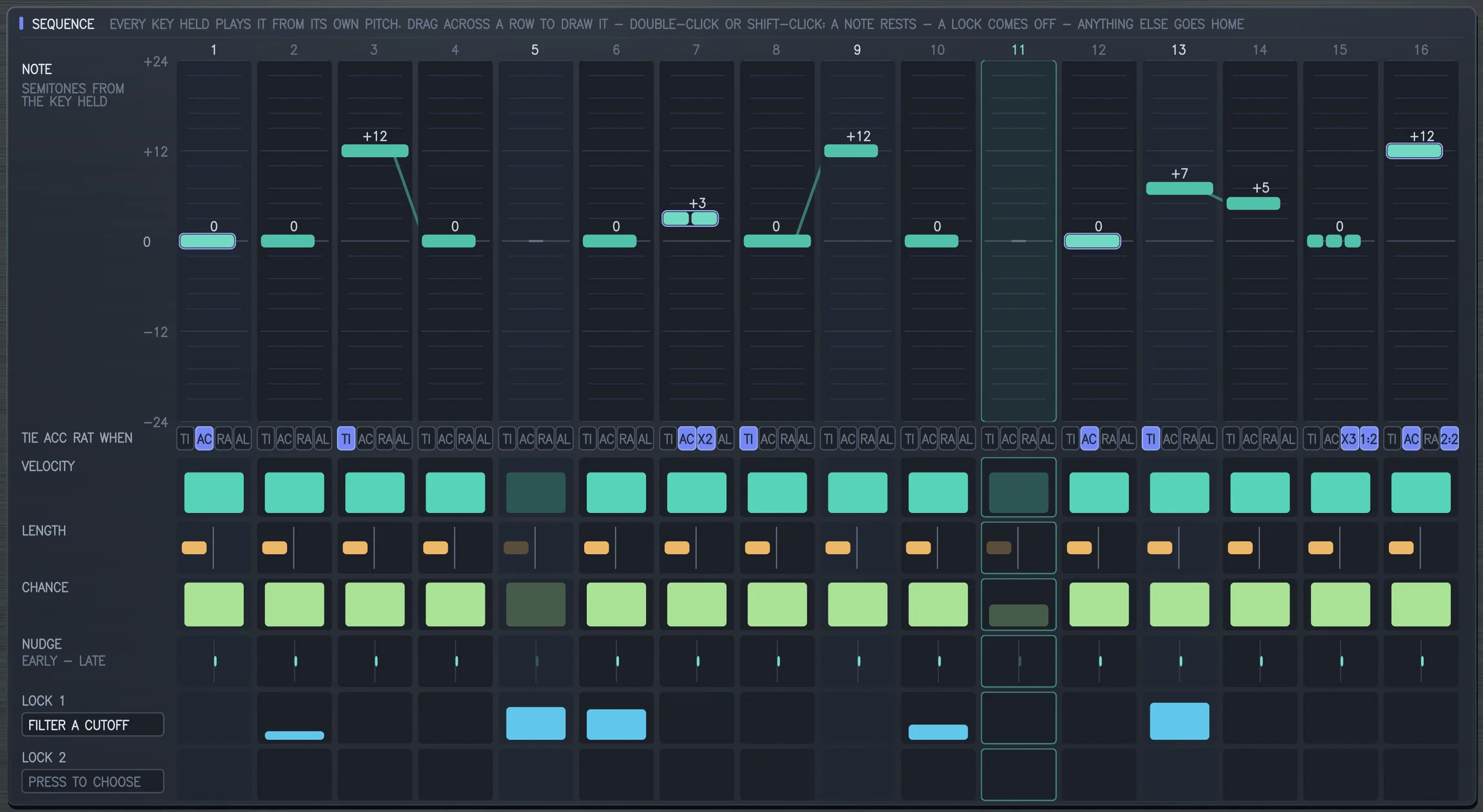
Ties, accents, ratchets, chance, and two locks a step. Every key held plays it from its own pitch.
Six pages
THE CARD One voice, end to end.
Our flagship
Every note is a different synthesizer - literally.
It is named for what it is before it makes a sound: a frame. One signal path, every position on it an empty bay, built to carry whatever circuit you fit there and to hold its shape while you change them. Several of its circuits were written for it and now live in the engine inside Phonon, where everything we build next can use them, and its arpeggiator is Phonon's own, moved in whole.
VST3 · Windows 64-bit No activationmacOS VST3 and Audio Unit are in development.
At a glance
| Format | VST3 instrument · Windows 64-bit |
|---|---|
| In development | macOS VST3 and Audio Unit |
| Voices | 9, a baker's eight · poly, unison, mono, canon |
| Oscillator boards | 10 · saw core, triangle core, DCO, logic, divide-down, diode shaper, west coast, digital wavetable, digital super saw, digital karplus-strong |
| Filter boards | 12 · diode, CMOS, slew, four-pole op-amp, cascade, ladder, diode ladder, scream, velvet, fizz, twin, gate |
| VCA boards | 2 · OTA, vactrol |
| Envelope boards | 3 · RC, current source, function generator |
| Modulation boards | 5 · LFO, function generator, sample and hold, shift register, drawn |
| The grid | 9 sources × the inputs the fitted boards have, up to 6 |
| Push | +21.5 dB on the diode board, -27.9 on the slew |
| Wave wrapper | On every oscillator bay · a comparator ladder, WRAP one to eight times |
| Resonance folder | Folds filter A's or filter B's ring, and nothing else |
| The unit | Serial-drawn parts · grade, age, warm-up, supply, crosstalk, floor, room |
| Calibration | No tuning pots · one CALIBRATE that reaches every board |
| Tuning | Any Scala (.scl) file, up to 256 notes · the arpeggiator and the sequencer follow it |
| Matrix | 16 slots × 15 sources, 62 destinations, VIA on each |
| Arpeggiator | 10 contours, one a lane you draw · 1 to 4 octaves · 11 rates · a three-voice canon |
| Automata | 8 lanes, each moving any one control · 12 algorithms |
| Sequencer | 64 steps in four bars · polyphonic · two parameter locks a step |
| Frozen | All three drawn from the song position and a seed · a bounce is the playback |
| Rack | 4 bus slots and one machine inside every voice · 7 machines |
| Audio in | One auxiliary stereo input, to the grid and a follower |
| Parameters | 336 automatable · 467 slots, 131 held for what comes next |
| The panel | 1160 by 892 · six pages that letter themselves · PANEL SIZE 50 to 200 percent |
| Measured | 230 claims · 196 figures held to their numbers · validator 47 of 47 |
| Manuals | Owner's Manual and Service Manual, both shipped |
| Activation | None. No license server, no phone-home |